

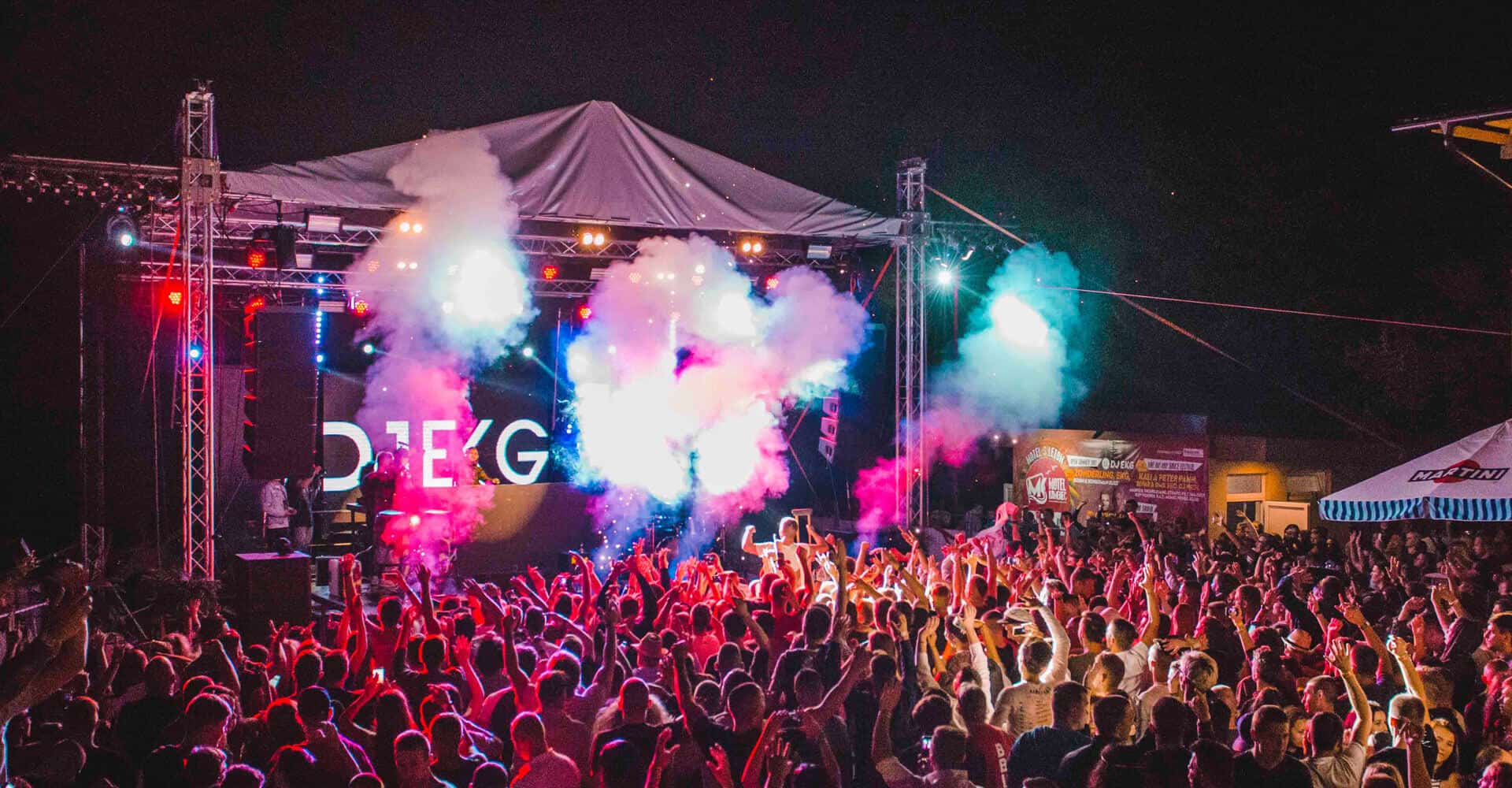
The Speed of Sound: Why Delaying Speakers is Critical for Event Clarity
The Physics of Echo: Why Delay Timing is Critical
Sound is surprisingly slow. While light travels almost instantaneously, sound travels through the air at approximately 1,130 feet per second (depending on the Arizona heat and humidity).
When we place “delay speakers” (also called relay speakers) further back in a large ballroom or outdoor plaza, those speakers are physically closer to the audience in the back. If we don’t “delay” the signal going to those speakers, the sound will jump out of them before the sound from the main stage speakers has even finished traveling through the air.
The result? The audience hears a “double hit.” It sounds like a disorganized echo, and it’s a fast track to listener fatigue.
1. The Math of Synchronization
To fix this, our engineers use digital signal processors (DSPs) to “hold back” the audio going to the delay speakers. We calculate the exact number of milliseconds needed to wait so that the sound from the stage and the sound from the delay speaker hit the listener’s ear at the exact same time.
The basic formula we use is:
$$Time (ms) = \frac{Distance (feet)}{1.13}$$
For example, if a delay speaker is 100 feet away from the main stage, we need to delay that speaker by approximately 88.5 milliseconds.
2. The Haas Effect (Precedence Effect)
A true professional audio engineer doesn’t just sync the speakers; they use the Haas Effect. This is a psychological phenomenon where the human brain “locks on” to the first sound it hears.
By delaying the secondary speakers just slightly more than the math requires (usually an extra 5–15ms), we trick the listener’s brain into thinking all the sound is coming from the stage. Even though the speaker right next to them is doing most of the work, the “image” remains focused on the speaker on stage.
3. Why This Matters for Your 2026 Event
In 2026, events are getting larger and more spread out. Whether it’s a fan activation for the NCAA Women’s Final Four or a massive corporate gala, “Distance-Synced” audio is what separates a professional production from a chaotic one.
- Intelligibility: Your CEO’s speech stays crisp and easy to understand.
- Immersive Experience: The audience feels “wrapped” in the sound rather than distracted by echoes.
- Reduced Volume: Because the sound is synced, we don’t have to push the main stage speakers to ear-splitting levels to reach the back of the room.
Get the “Phase-Perfect” Edge
Don’t let the speed of sound ruin your message. At Audio Mix Pros LLC, we bring scientific precision to every Phoenix event, ensuring your audio is perfectly aligned from the front row to the very back.
Search
Popular Posts
-
Audio Visual Services in Phoenix, AZ: Why Audio Mix Pros LLC Is the Go-To Choice for Professional Event Production
If you’re planning an event in Phoenix, one thing can make or break the entire experience: your audio and visual setup. Whether it’s a corporate event, wedding, conference, or live performance, poor sound or lighting instantly lowers the perceived value of your event. That’s why businesses and event planners across Arizona trust Audio Mix Pros…
-
The Ultimate Guide to Audio Visual Service Rentals in the Phoenix Metro Area
Whether you are hosting a tech summit in Downtown Phoenix or an exclusive donor gala in Paradise Valley, your event’s success hinges on technical execution. Audio Mix Pros LLC provides professional-grade AV rentals and certified engineering across the entire Phoenix DMA. We don’t just “drop off gear.” We provide the technical backbone for the most…
-
The Speed of Sound: Why Delaying Speakers is Critical for Event Clarity
The Physics of Echo: Why Delay Timing is Critical Sound is surprisingly slow. While light travels almost instantaneously, sound travels through the air at approximately 1,130 feet per second (depending on the Arizona heat and humidity). When we place “delay speakers” (also called relay speakers) further back in a large ballroom or outdoor plaza, those…